When I set out to find the best varmint scope for 22-250, I wanted a scope that could keep up with the cartridge’s flat trajectory, long-range potential, and fast target engagement.
In this guide I’ll explain why these scopes are ideal for varmint hunting, highlighting the key features that matter most such as magnification range, reticle options, parallax adjustment, and overall durability.
I’ll also share my top picks, break down what to look for in a buying guide, and answer some frequently asked questions so you can confidently choose a scope that matches your .22-250 and your style of shooting.
Why a Varmint Scope For 22-250
Must Have Features for Best Varmint Scope For 22-250
1) Versatile Magnification Range
A .22-250 is known for its flat trajectory and high velocity, making it perfect for shots ranging from medium to long distances. A scope with a versatile magnification range, such as 3-9× for general use or up to 6-24× for precision shooting, lets you handle close shots and distant targets with equal confidence. Lower magnification gives a wider field of view for quick target acquisition, while higher magnification allows you to zoom in on small varmints and place shots more accurately at longer ranges.
2) Quality Glass and Lens Coatings
Good optics are essential for spotting small targets and maintaining clarity across various lighting conditions. Multi-coated or HD lenses improve light transmission and color accuracy, helping you see fine details when varmints are partially hidden or during low-light times like dawn and dusk. Coatings that reduce glare also make it easier to shoot in bright conditions, while protective coatings help prevent scratches and smudges on the lenses.
3) Reticle Design and Functionality
The right reticle can make a big difference in how quickly and accurately you shoot. Reticles with holdover and windage markings let you compensate for bullet drop and crosswinds without having to dial the turrets constantly. Some shooters prefer illuminated reticles for low light conditions, which can help maintain visibility of the aiming point. Whether you choose a first or second focal plane reticle depends on your style, but having a reticle that matches your shooting distances and conditions is key.
4) Adjustable Parallax or Side Focus
Parallax adjustment allows you to fine-tune the image focus at various distances, keeping the reticle and target on the same optical plane. This is especially valuable for the .22-250, which is capable of shots at both short and very long ranges. Without parallax adjustment, your reticle might appear to shift when you move your head slightly, reducing accuracy. Side focus knobs or adjustable objectives give you more control over this, ensuring sharper images and more precise aiming.
5) Turret and Adjustment Quality
Precision in windage and elevation adjustments is vital for varmint shooting where small targets demand exact hits. Look for scopes with repeatable and tactile turret clicks, usually in ¼ MOA increments, to make fine adjustments. Features like zero stop or easy reset turrets allow you to return to your original zero quickly after making changes in the field. A scope with a reliable adjustment system ensures your settings hold even after multiple shots or bumps.
6) Durable and Weatherproof Construction
Varmint hunting often takes place in open fields, brushy areas, or rugged terrain, where your equipment may be exposed to moisture, dust, and bumps. A scope built with a one-piece aluminum tube, sealed against water and fog, and purged with nitrogen or argon to prevent internal fogging will last longer and maintain performance. Scratch-resistant lens coatings and shockproof design also protect the scope during transport or recoil, making it more dependable for long-term use.
5 Best Varmint Scope For 22-250
1) NightForce SHV 5-20×56
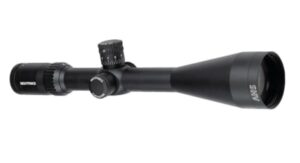
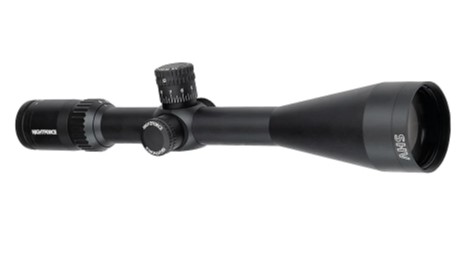
The NightForce SHV 5-20×56 is a long-range hunting scope built with power and precision that matches well with fast, flat-shooting cartridges like the .22-250. Its 5-20× magnification range gives enough flexibility to track varmints at moderate ranges and then dial up to see very fine detail at longer shots. The large 56 mm objective lens helps gather a lot of light, making it easier to work in lower light or against shaded targets.
The scope uses a second focal plane reticle. That keeps the reticle size constant as you adjust magnification which some shooters prefer when switching between close shots and longer ones without the distraction of reticle scaling. You can choose between reticles like MOAR™ or Forceplex™, with some versions having center-only illumination which can improve visibility in dim conditions without causing flare or distraction when light is good.
Adjustments and mechanics are solid. The elevation turret includes ZeroSet™ which allows you to quickly return to your zero point after making several elevation adjustments. Windage and elevation offer a wide range (80 MOA elevation, 50 MOA windage), which helps when pushing out long distances or correcting for high wind. Side parallax adjustment lets you focus from about 25 yards out to infinity so your image stays sharp whether the varmint is close or far away.
The construction is rugged, with a 30 mm tube that provides strength without being too overbuilt. Eye relief is around 3.5 inches which gives a comfortable margin, especially helpful on rifles that can have heavy recoil or strong muzzle rise. The scope is relatively heavy given its size and large objective, but when mounted properly it balances well for varmint work and long-range shots.
Pros
- High magnification range good for long shots plus enough utility for moderate distances
- Large 56 mm objective lens delivers excellent light gathering for dawn, dusk, or shaded targets
- ZeroSet™ turret makes returning to your zero fast and reliable after adjustments
- Wide adjustment range (80 MOA elevation, 50 MOA windage) helps with long-range corrections or elevation changes
- Side parallax adjustment keeps image sharp at close and long distances
- Several reticle choices and optional illumination let you match scope to your shooting style
Cons
-
Weight and size are substantial which may affect balance or require heavier mounts
2) Vortex Viper HD 3-15×44
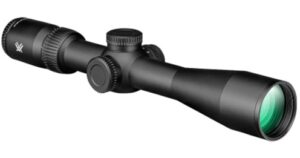
The Vortex Viper HD 3-15×44 is a versatile riflescope made to cover a wide range of varmint shooting conditions. On a .22-250 this scope gives enough magnification to spot small targets at longer ranges while still letting you engage varmints at moderate distances with clarity and speed. The 3-15× magnification works well for both close-in shots and more distant work where precision and detail matter. The 44 mm objective lens helps gather light so you get better visibility in low lighting or when shadows are intruding.
Optical performance is very good. The HD optical system improves contrast and reduces chromatic aberration so that details remain sharp even at high magnification. Fully multi-coated lenses increase light transmission, which helps when varmints are in shaded areas or during dawn or dusk. There is an illuminated reticle to aid aiming in those kinds of low light settings. The reticle (for example the Dead-Hold BDC or VMR-3 MOA versions) provides useful holdover marks and windage hash marks so you can make adjustments without having to shift scope settings too often.
Adjustment and build quality are strong. The scope uses a 30 mm main tube which allows plenty of internal travel for elevation and windage. It has capped turrets for the windage side and exposed locking elevation turret with a “RevStop Zero” ring on some versions to help return to zero without losing count. Parallax can be set from about 20 yards to infinity, so close-shots and farther shots both can be brought into focus clearly. Eye relief is around 3.4 inches which gives enough margin for safe and comfortable shooting even when the rifle recoils sharply.
The Viper HD 3-15×44 is built tough. The scope body is made from aircraft-grade aluminum, argon gas purged, sealed with O-rings to resist fog and water, and it is shockproof so it stands up to recoil and rough field use. ArmorTek coating on the lenses helps protect against scratches, dirt, oil which keeps clarity over time. Finish is matte black anodized to reduce glare and resist corrosion.
Pros
- Magnification range from 3× to 15× gives flexibility for both close and long range varmint shots
- Large 44 mm objective gathers plenty of light which improves visibility in dusk, dawn, or shadowy terrain
- Illuminated reticle and holdover/windage hash marks help with quick aiming and compensation without over-dialing
- Robust build quality including HD optics, ArmorTek coated lenses, water-proof, fog-proof, and shock-proof design
- Tight and useful adjustment system with capped/locking turrets and RevStop Zero to return to zero reliably
- Generous eye relief helps reduce the risk of scope contact with the shooter during recoil
Cons
-
The scope is moderately heavy which can make a lightweight rifle front-heavy or more tiring over long carries
3) Vortex Diamondback 4-12×40
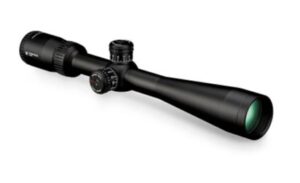
The Vortex Diamondback 4-12×40 is a mid-range scope that offers good value for shooters using the .22-250. The 4-12× magnification range gives enough flexibility to engage varmints at moderate distances without being over magnified, and the 40 mm objective gathers ample light so you get clarity during lower light periods such as early morning or late afternoon. On the .22-250, which is flat-shooting and fast, being able to see finer details at 12× helps with precision at longer shots while still being quick to aim when varmints pop up closer.
Optical performance is solid. The fully multi-coated lenses help improve light transmission and reduce glare. The Dead-Hold BDC reticle provides hash marks that assist with bullet drop compensations and windage holds which is useful when you need to adjust without constantly dialing the turrets. The scope delivers a clear image, especially in good lighting, with a fast-focus eyepiece that makes reticle focusing easy and helps with rapid target acquisition.
The build and mechanical features are reliable. The tube is made from aircraft-grade aluminum, sealed with O-rings and purged to resist fog and water. Turrets operate in precise ¼ MOA clicks for elevation and windage, which allows for fine adjustments. The scope has capped turrets to protect against accidental knockoffs. Eye relief is about 3.1-3.4 inches which works well with many rifles, though care is needed in setup to avoid scope-eye with aggressive recoil.
While the Diamondback 4-12×40 delivers good performance for its price, there are trade-offs. The reticle is second focal plane which means that the holdover marks are accurate only at specific magnifications. There is no illumination in the reticle, which can make low light aiming more difficult. Parallax is preset (often around 100 yards) and not adjustable in many versions, which reduces flexibility if you engage targets at much closer or much farther ranges. The scope is durable but not ultra light, so on very light varmint rigs weight towards the front can be felt.
Pros
- Magnification range well suited for moderate and some long distance varmint shooting on .22-250
- Fully multi-coated optics help maintain clarity and reduce glare under many lighting conditions
- Dead-Hold BDC reticle gives useful holdover and wind compensation without having to dial every adjustment
- Precise ¼ MOA turret clicks for fine tuning of windage and elevation
- Built for durability with aircraft-grade aluminum tube, weather sealing, and fogproof / waterproof design
- Lifetime warranty adds long-term value
Cons
-
Reticle being second focal plane limits accuracy of holdover marks at non-calibration magnifications
4) Leupold VX-Freedom 3-9×40
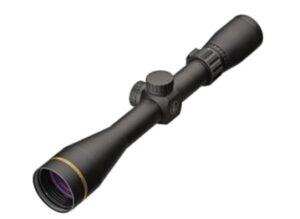
The Leupold VX-Freedom 3-9×40 is a riflescope built for hunters and shooters who want reliability and simplicity in the field. On a .22-250 varmint rifle this scope offers a magnification range that lets you engage from medium shots out to longer ranges while still being quick and usable when varmints move closer. The 40 mm objective lens gathers a decent amount of light so image brightness remains good in early mornings or later afternoons.
Optical clarity is strong. Leupold’s Advanced Optical System helps reduce glare and improve contrast so you can pick out small targets against varied backgrounds. The lens surfaces are scratch resistant which helps them maintain clarity through exposure to dirt or brush. Eye relief remains generous across the magnification range so mounting can be done safely to avoid scope-eye issues with sharper recoil or heavy follow-through.
Reticle options include variants like Duplex, Rimfire MOA, Tri-MOA, and illuminated versions (such as the FireDot models). The reticle is second focal plane so the reticle size remains constant when you change magnification. That means holdovers and windage marks are most accurate at a specific magnification (often the highest) rather than at all zoom settings. Some versions also offer illumination for low-light aiming which adds usability at dusk or dawn.
Adjustment and build quality are solid. The tube is designed to be waterproof, fog-proof, and shock-proof allowing it to withstand field conditions. Windage and elevation are controlled via finger-click turrets with ¼ MOA steps which gives good precision when zeroing or making small adjustments for wind or elevation drop. There is also a zero-stop or reset-index ring in some models so you can more easily return to your zero after dialing. Weight is moderate which helps when carrying or mounting on lightweight varmint rigs.
Overall the VX-Freedom 3-9×40 is a very capable scope for varmint work with the .22-250 where moderate to long range precision matters but speed, simplicity, and reliability are also priorities.
Pros
- Magnification range (3-9×) gives useful reach without making target acquisition slow
- 40 mm objective improves light gathering in lower light or shaded conditions
- Reticle options allow you to choose based on preference (illuminated, MOA, or simple duplex)
- Durable and weather-sealed construction holds up under field use
- Precise ¼ MOA clicks make elevation and windage adjustments repeatable
- Generous eye relief reduces risk of injury from scope-eye and improves comfort
Cons
-
Second focal plane reticle means holdover marks are only accurate at certain magnifications rather than all zoom settings
5) Bushnell Banner 3-9×40
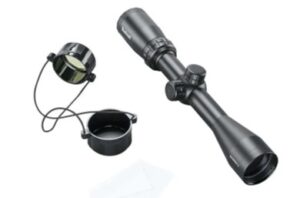
The Bushnell Banner 3-9×40 provides a solid magnification range for varmint hunting with a .22-250. The 3-9× lets you quickly acquire closer targets when they appear and zoom in for more precise shot placement on smaller or distant varmints. The 40 mm objective lens helps collect light so image quality remains acceptable in lower light such as early morning or late evening.
Optically the Banner is built with multi-coated lenses and uses Bushnell’s Dusk & Dawn Brightness coatings to help improve image clarity and brightness when lighting is marginal. The exit pupil varies from about 13 mm at the low end of magnification to about 4.4 mm at the high end which gives good light gathering at lower zoom and usable clarity up high in daylight. The field of view is wide enough at 3× to track movement and still detailed enough at 9× for precise aiming at distance.
The mechanical and adjustment features are practical. Turrets for windage and elevation offer 60 MOA of adjustment in many versions which allows for compensation at long ranges or in windy conditions. The click value is ¼ MOA which gives fine control for zeroing and holdover corrections. Eye relief is generous and the fast focus eyepiece helps get the reticle sharp quickly. The tube is made from a single piece of aluminum, sealed with nitrogen for fog-proof performance and water resistance, making it durable in field conditions.
The reticle is second focal plane in the standard versions so reticle subtensions do not scale with magnification. That means for precise holdovers you may need to stay at a given magnification where the reticle is calibrated. Some versions include illuminated reticles (e.g. the CF500) with selectable red or green aiming points which helps when lighting is low or contrast is poor.
Pros
- Magnification range 3-9× gives a good balance between speed at close range and precision at longer shots with .22-250
- 40 mm objective gathers light well to help maintain clarity in dim or shaded conditions
- ¼ MOA turret adjustments allow fine tuning for elevation and windage
- Dusk & Dawn Brightness lens coatings improve visibility in marginal lighting such as dawn or dusk
- Generous eye relief and fast focus eyepiece help with comfort and speed in setup or tracking moving varmints
- Durable build with waterproof, fogproof, and nitrogen filled tube to handle field conditions
Cons
-
Reticle being second focal plane means holdover marks only truly accurate at certain magnifications rather than all zoom settings
Best Varmint Scope For 22-250 FAQs
1) What magnification range works best for a .22-250 varmint rifle?
A magnification range of 3-9× up to 6-24× is common for .22-250 varmint rifles. Lower settings like 3× or 4× help with fast target acquisition at closer ranges, while higher settings such as 12×, 15×, or 24× let you clearly see small varmints at longer distances. Choose a range that matches how far you typically shoot.
2) Why is an adjustable parallax or side focus important on a varmint scope?
Adjustable parallax or side focus allows you to fine-tune image focus at different distances. With a flat-shooting cartridge like the .22-250, you may shoot anywhere from 50 yards to several hundred yards. Being able to adjust parallax keeps the reticle and target on the same plane, improving accuracy and reducing sighting errors.
3) Should I pick a first focal plane or second focal plane reticle for varmint hunting?
First focal plane (FFP) reticles keep the reticle’s holdover and windage marks accurate at all magnifications, which helps if you shoot at varied zoom levels. Second focal plane (SFP) reticles maintain a constant size but are only “true” at one magnification, usually the highest. Most varmint shooters with .22-250 prefer SFP for simplicity unless they do a lot of long-range work requiring precise holdovers at various powers.
4) How important is lens quality and coatings in a varmint scope?
Lens quality and coatings make a big difference in clarity, brightness, and color accuracy, especially during dawn and dusk when varmints are most active. Multi-coated or HD lenses improve light transmission and reduce glare. Scopes with coatings designed for low light can help you spot and identify small animals in challenging conditions.
Conclusion
After reviewing all the options and features, I can confidently say the best varmint scope for 22-250 combines a flexible magnification range, clear optics, reliable adjustments, and durable construction to match the cartridge’s speed and long-range precision. These scopes are ideal because they help you spot small targets, stay accurate at different distances, and withstand field conditions.
For the best overall choice, I recommend the Vortex Viper HD 3-15×44 for its balance of clarity, features, and price. If you’re on a tighter budget, the Bushnell Banner 3-9×40 gives solid performance at an affordable cost.
For a premium option, the NightForce SHV 5-20×56 offers outstanding long-range capability and rugged reliability. With these three options, you can find a scope that perfectly matches your .22-250 whether you’re just starting out or looking for top-tier performance.
See Also: